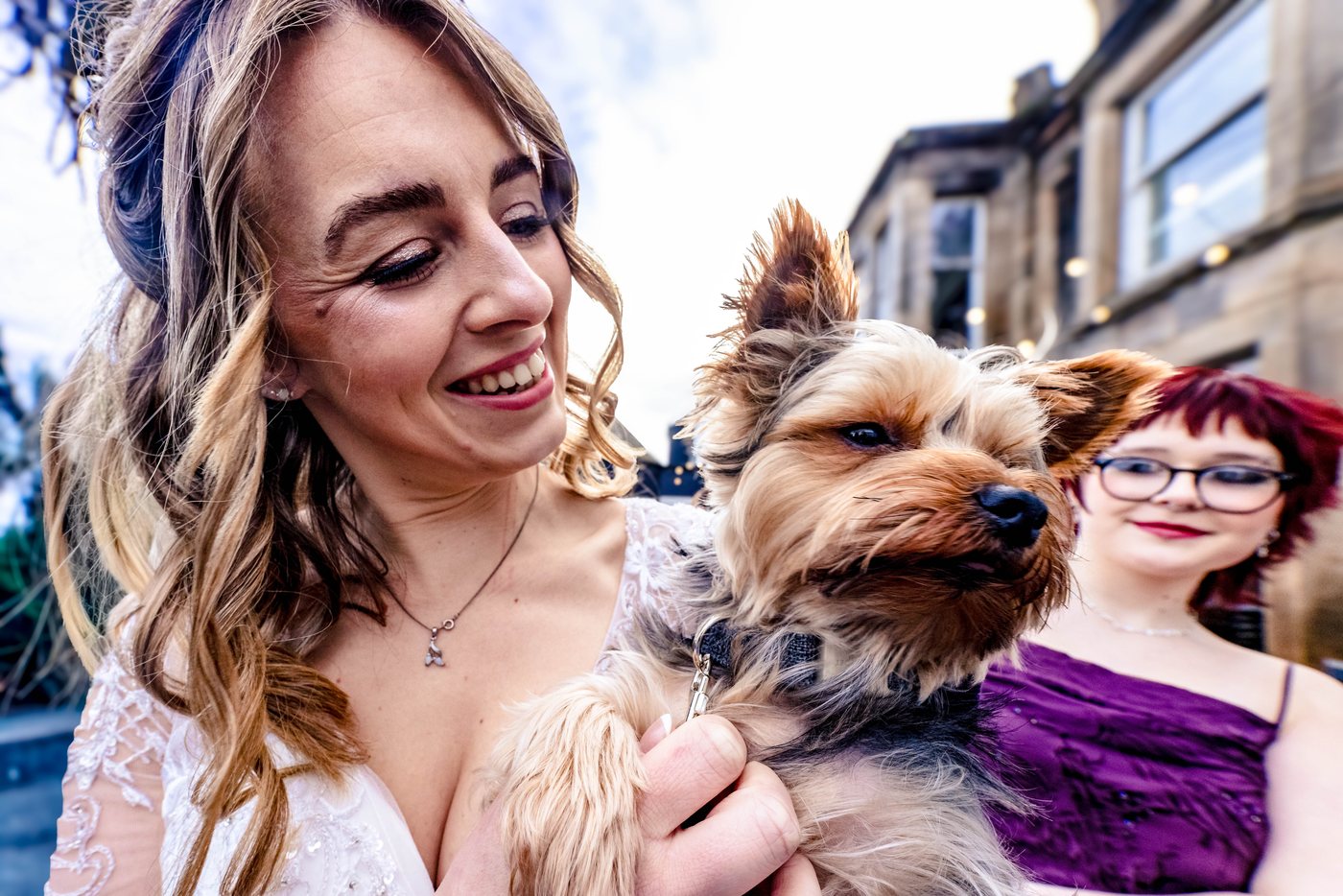
Everyone books a wedding photographer for the ceremony. Almost nobody thinks about the four hours afterwards, and that's usually where the photographs you'll actually love get made.
The party is the part of the day nobody rehearses. There's no order of service, no celebrant keeping things on track, no one telling anybody where to stand. People have had a drink, the shoes are off, and they've stopped performing. That is exactly when the real stuff surfaces.
Why we shoot close
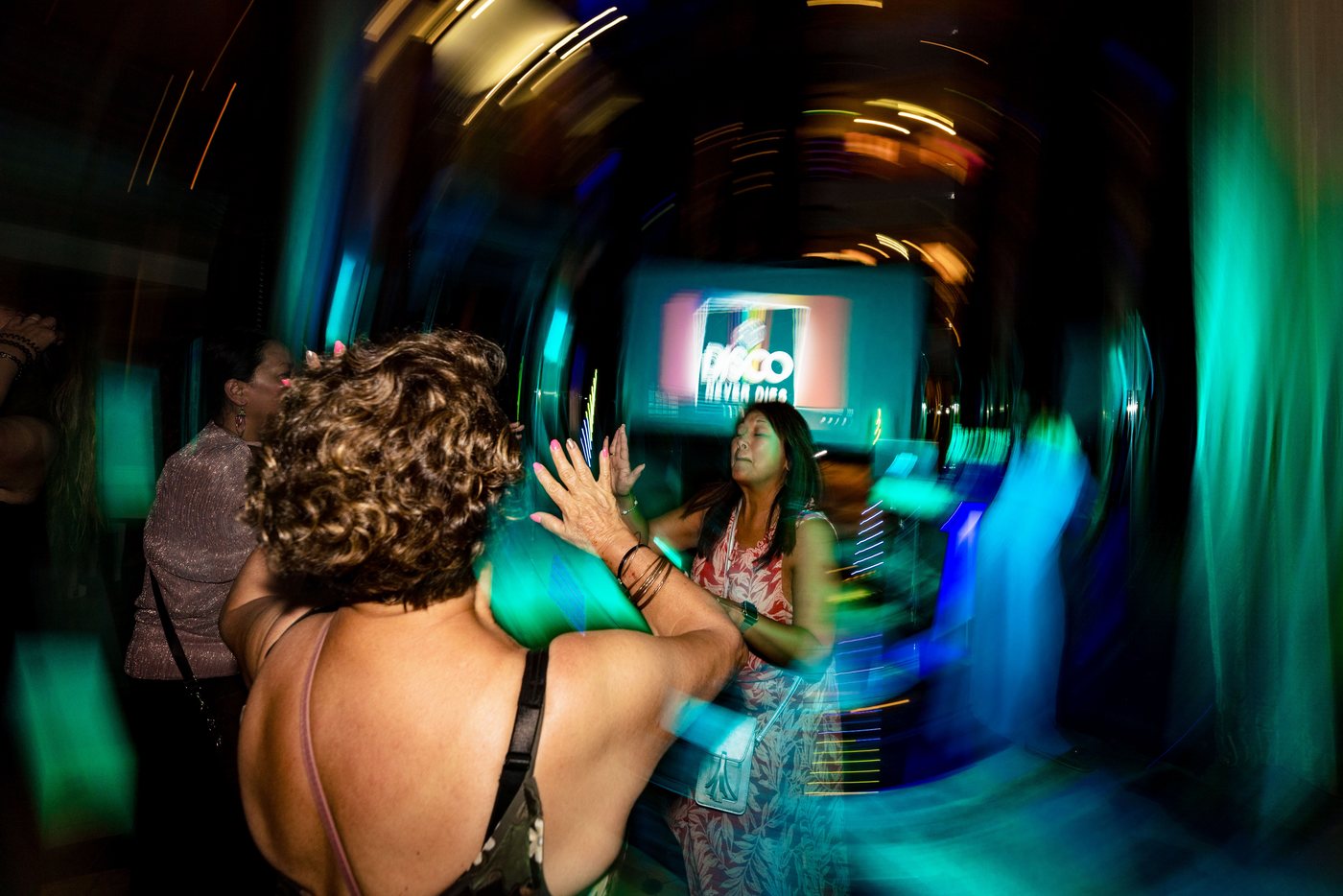
You can photograph a dance floor from the edge of the room with a long lens. It's safer, it's easier, and it's what a lot of photographers do. It also looks like surveillance. Everything is small, flat, and far away, and you can feel the distance in the picture.
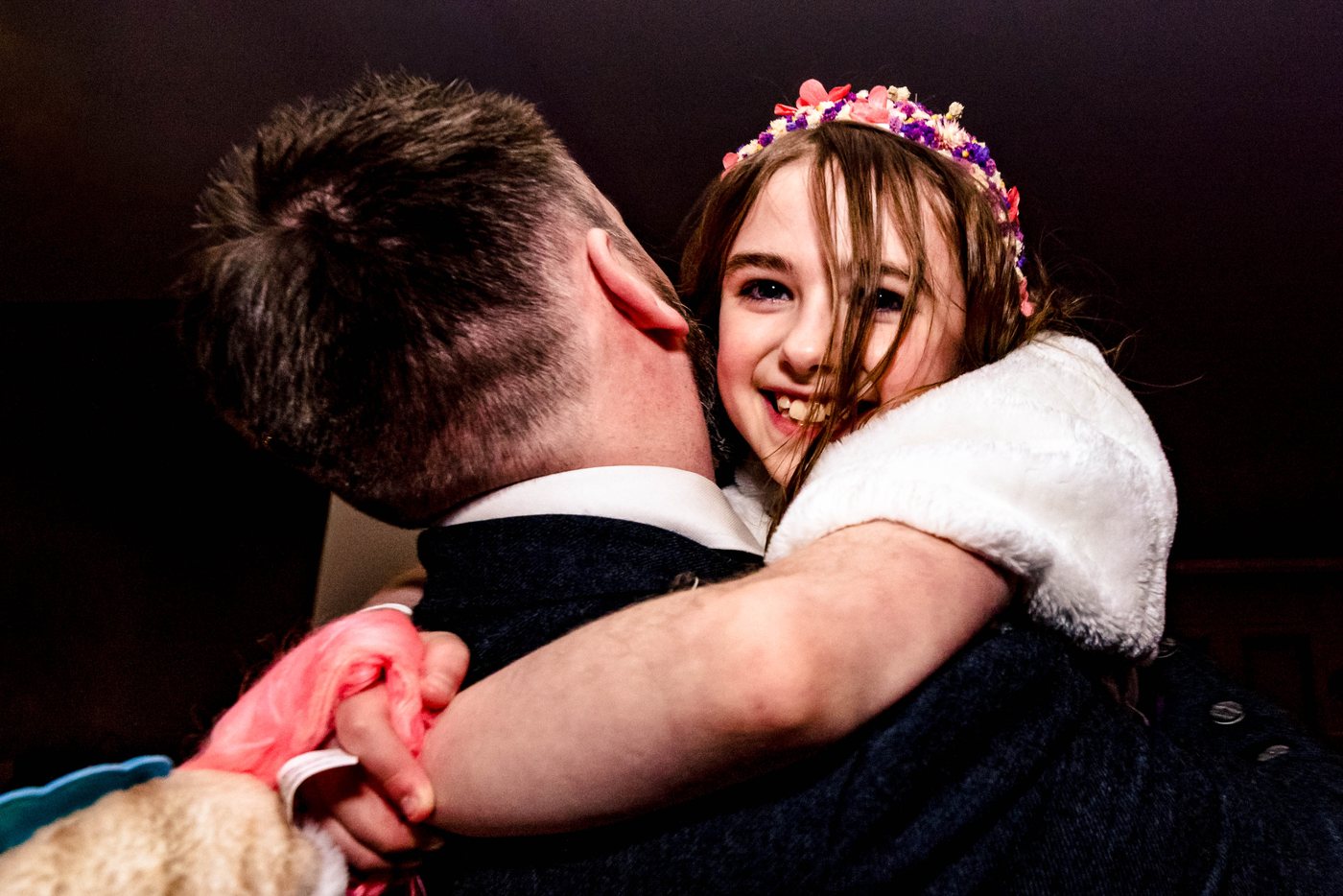
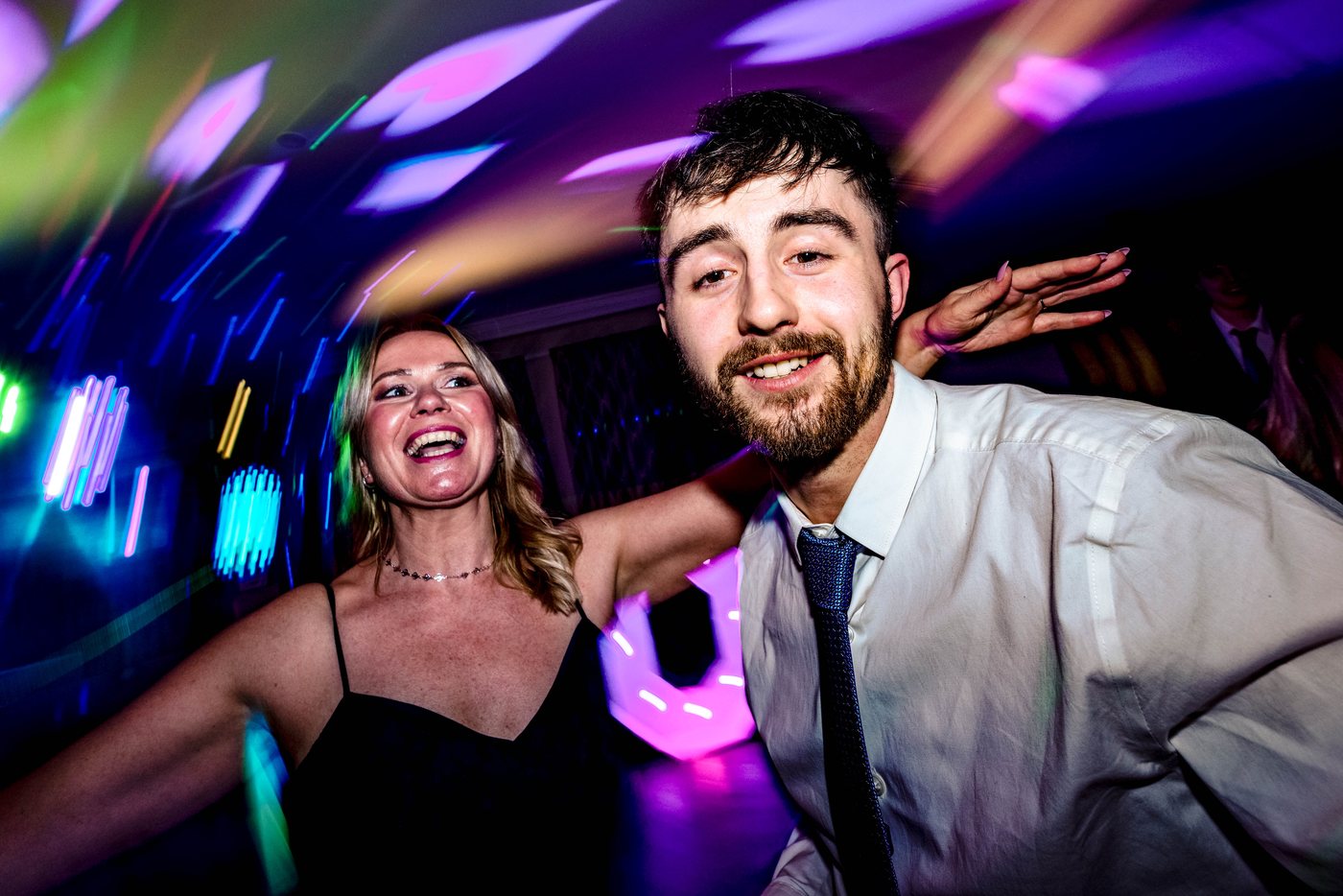
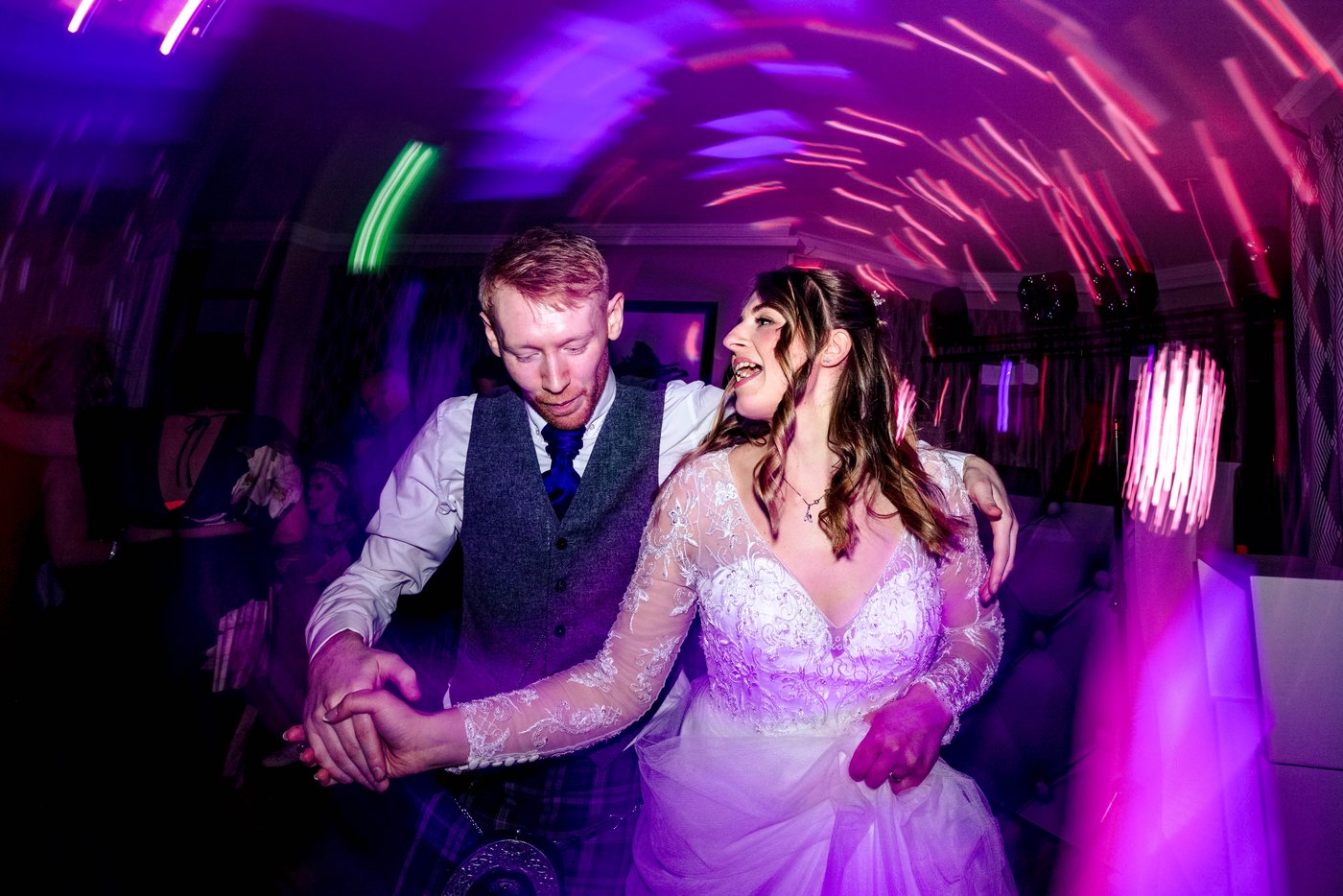
We work the other way. Wide lens, close in, right in the middle of it. When you're that near to someone, you're not observing the moment, you're standing inside it. The frame fills with the actual expression on someone's face instead of a figure across the room.
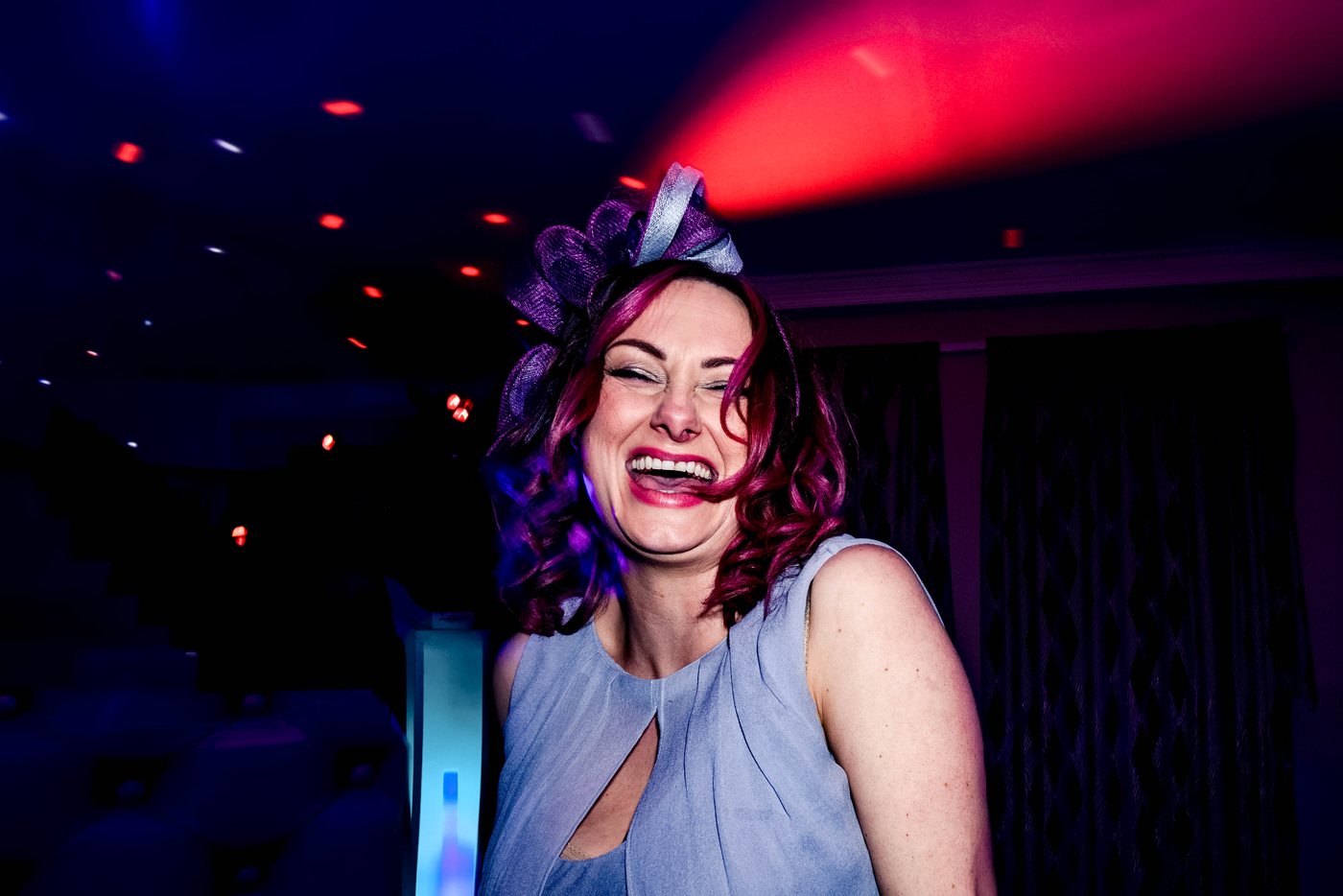
It changes what the photograph is about. From a distance you get a record of an event: people danced, the lights were purple, the room was full. Up close you get the thing itself. A face mid laugh. Someone's hand on someone's shoulder. The half second where a guest has completely forgotten there's a camera anywhere near them.
Getting close without ruining it
The obvious objection is that a photographer standing a metre away ruins the moment. That's fair, and it's true if you turn up cold at 10pm, push into the middle of the floor and start firing a flash at strangers.
The reason it works for us is that we've been there since the morning. We photographed the bridesmaids getting ready, the hairspray, the nerves, the last look in the mirror. By the time the music starts, we're not a stranger with a camera. We're the person who's been around all day.
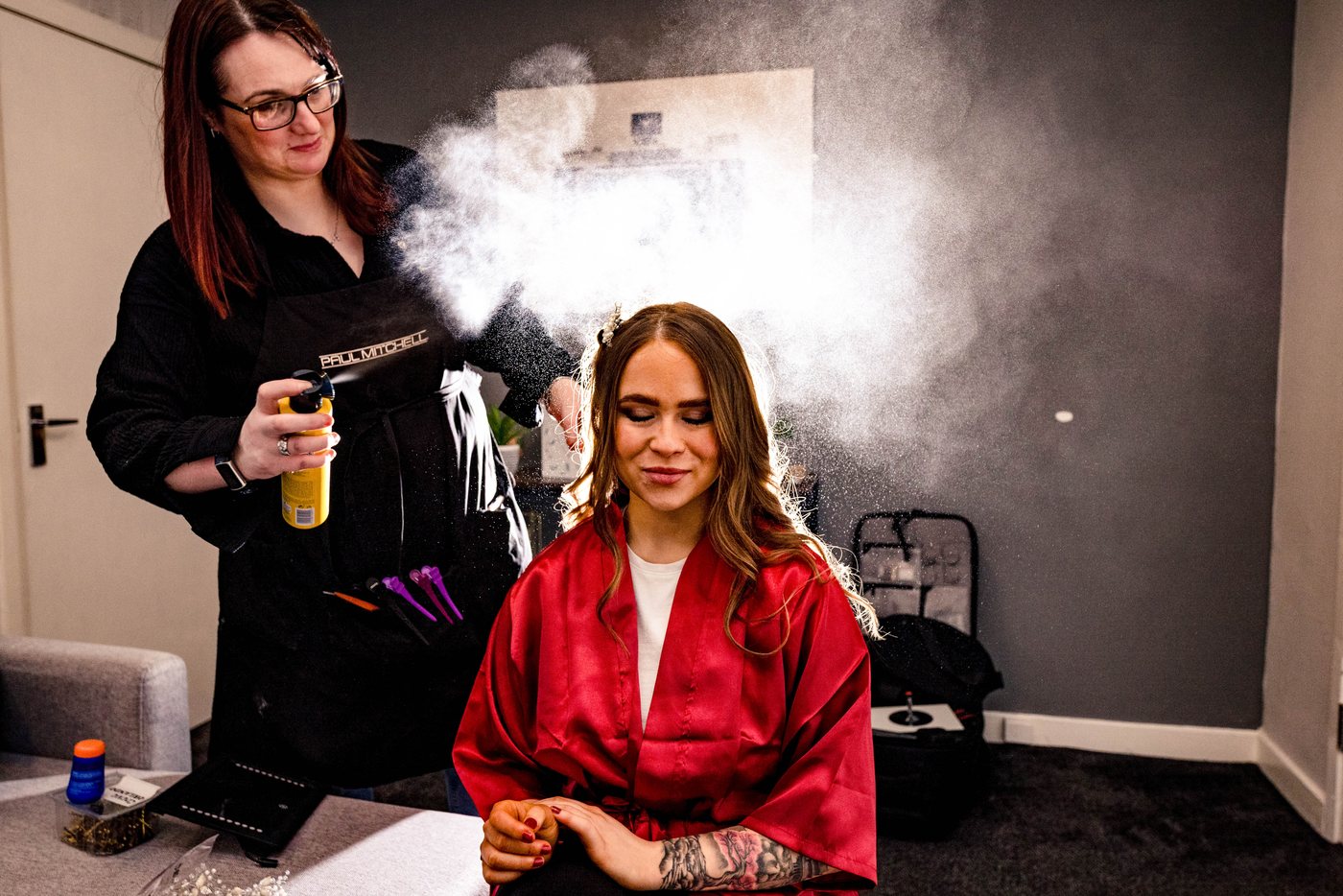
That's the whole trick, and there isn't much more to it than that. People relax around someone familiar. Turn up early, stay out of the way for eight hours, and by the evening you can stand close to someone without them tightening up.
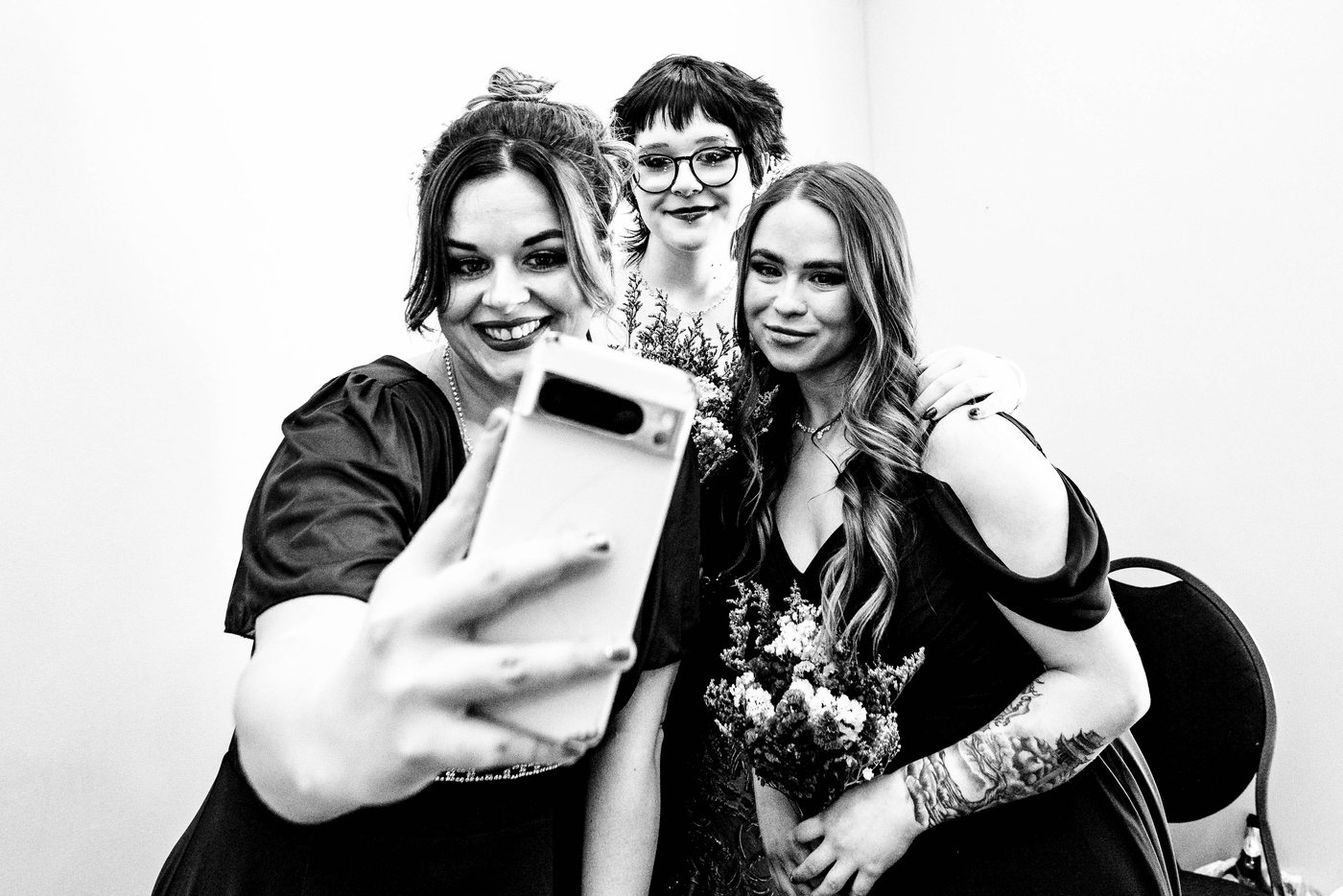
The guests are the story too
A wedding isn't only about two people. It's the only day your entire family and every friend you've kept are in one room at the same time, and that will probably never happen again in quite the same way.
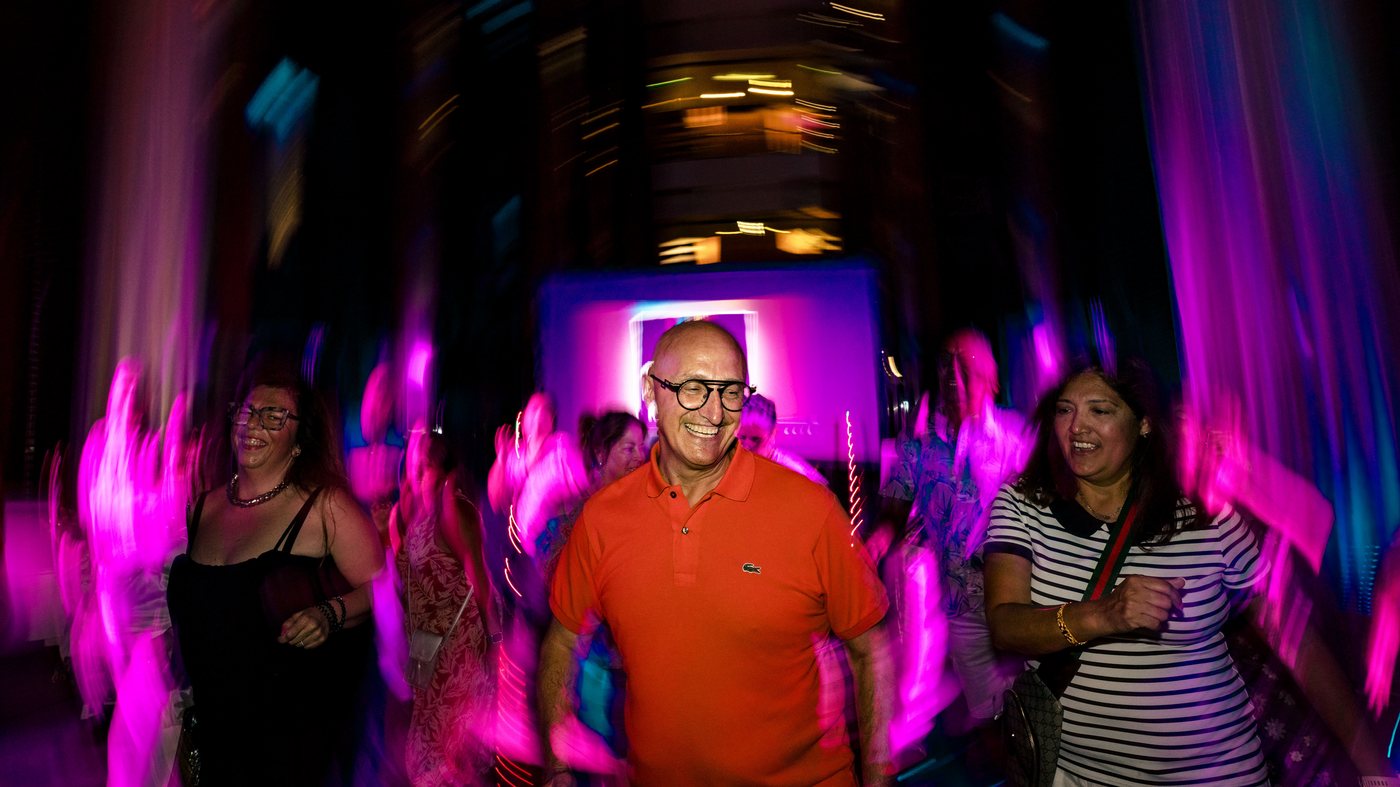
So we photograph the guests properly, not as background texture behind the couple. The uncle who commits fully to the dance floor. The friend laughing so hard she's bent double. The grandparent watching from a chair at the edge, taking it all in.
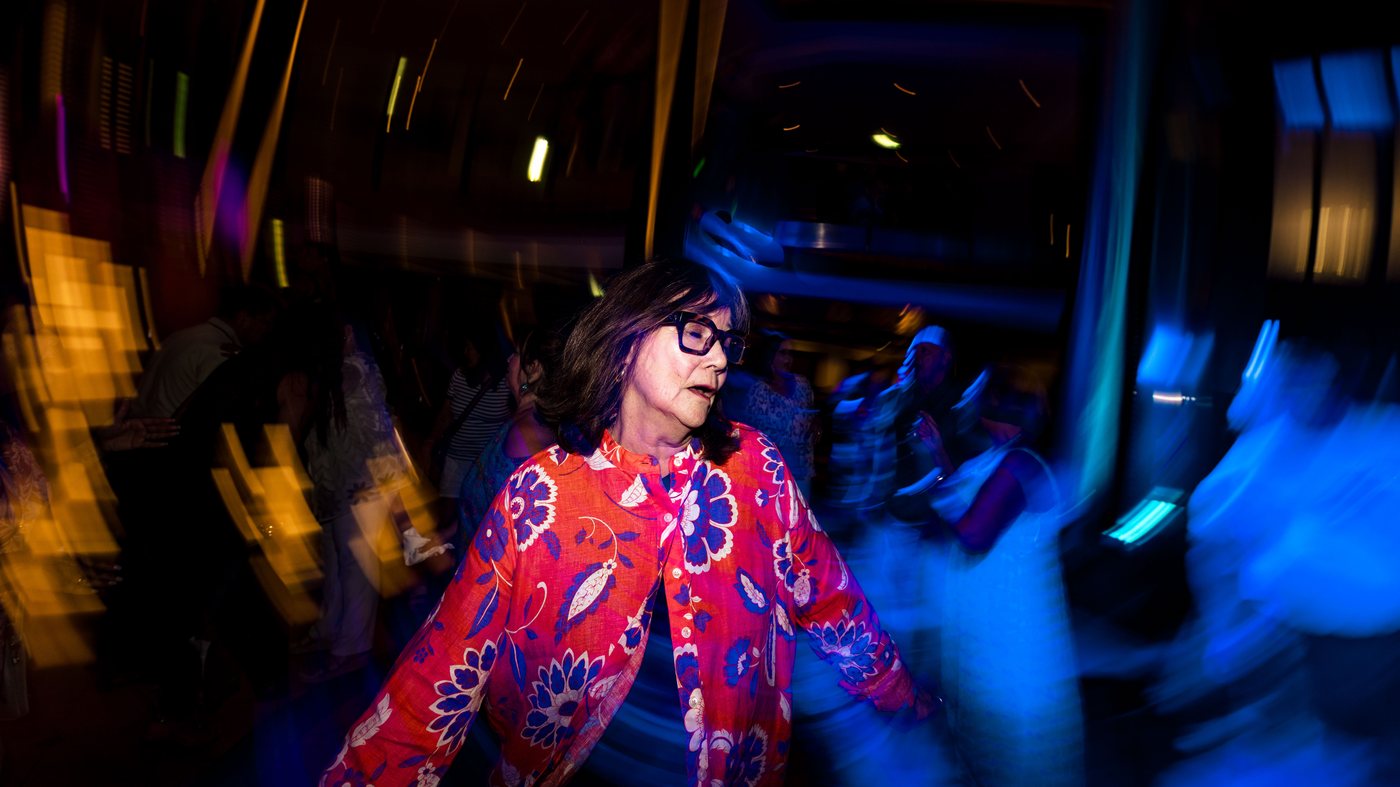
Couples often tell us afterwards that the guest photographs are the ones they didn't expect and can't stop looking at. You already know what your own day felt like. You don't know what it looked like from the other side of the room.
Working with the light that's there
Reception lighting is a mess by any technical standard. Coloured LEDs, haze, moving heads, a room that goes from pitch black to magenta in half a second. Plenty of photographers kill all of it with a bright flash and hand you photographs that look like they were taken in a hallway.
We'd rather keep it. The colour, the drag, the light trails, the motion: that's what the room actually felt like at that moment. Freeze it too hard and you lose the thing you were trying to record.
What you end up with
Photographs that feel like being there rather than looking at it afterwards. Faces big enough in the frame to read properly. Your people, close up, in the middle of a night none of them will get back.
Not staged. Not directed. Just the party, as it happened.